
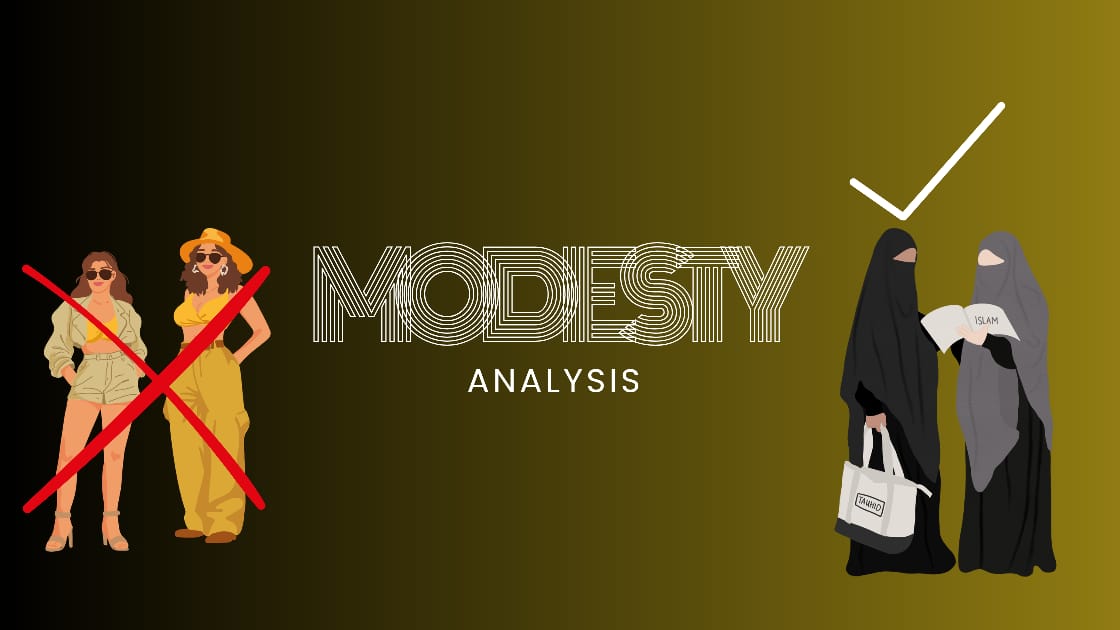
Beyond the Fabric: The Spiritual Essence of the Veil
The veil is not merely a piece of cloth; it carries far deeper meaning and purpose. It is a symbol of a woman’s obedience to Allah and her devotion to the teachings of the Prophet ﷺ. The veil serves as a form of protection and dignity, reflecting a woman’s self-respect, modesty (haya), and honor. It represents her choice to live by divine guidance rather than worldly trends. Through the veil, a woman expresses her inner purity, discipline, and moral strength—it is a visible sign that she values her character above appearance and her faith above fashion.
The Qur’an’s Command: Veiling Among the Purest of Generations
The Qur’an instructed the best women of this world to observe the veil before the best men ever created. Those women were the wives, daughters, and mothers of the Prophet Muhammad ﷺ and the noble companions (Sahabah) — paragons of purity, faith, and dignity. The men they veiled before were the most righteous and God-conscious individuals, whose hearts were illuminated by revelation. Yet even in their presence, Allah commanded these exemplary women to maintain modesty and cover themselves. This divine instruction was not about mistrust, but about preserving the sanctity and moral beauty of society.
If the purest women veiled before the purest men, what justification do we have today to disregard this timeless command? The veil was never meant to suppress women; it was revealed to elevate, honor, and protect them. In an age where modesty is often misunderstood, the Qur’an’s guidance remains clear — the veil is not a barrier, but a badge of faith and self-respect.
Hadith: The Prophet’s ﷺ Guidance on Modesty and the Veil
The Qur’an provides the foundation of modesty, and the Hadith of the Prophet ﷺ further clarifies and reinforces its practice. The Prophet ﷺ emphasized that modesty (haya) is not just an external act, but a reflection of inner faith.
He said:
“Modesty is part of faith, and faith leads to Paradise” (Sunan Ibn Majah 4184).
Through his teachings and the example of his household, he showed that the veil is both a command and a form of worship — a visible expression of obedience to Allah. The wives and daughters of the Prophet ﷺ, the purest women of their time, embodied this command with grace and pride. The Prophet ﷺ also instructed believing women to cover themselves properly when appearing before non-mahram men, not as a restriction, but as a means of protection, respect, and spiritual elevation.
The Hidden Agenda: How Media Manipulates the Image of the Veil
In the modern age of information and influence, the media has become one of the strongest forces shaping perceptions — and sadly, it often distorts the image of the veil. It portrays the hijab as a symbol of oppression, convincing women that liberation lies in exposure and that modesty limits ambition. Under the guise of “freedom,” it subtly pushes the idea that a woman’s worth depends on her appearance, not her intellect or faith.
Yet the reality is far from this illusion. The veil does not enslave women; it empowers them with dignity, control, and respect. This widespread misrepresentation is part of a deliberate narrative designed to weaken Islamic values and to blur the line between confidence and immodesty.
Those who preach against the veil rarely seek women’s empowerment—they seek their objectification and exploitation. By labeling the veil as tyranny, such propaganda strips away the honor that Islam grants to women. True freedom is not in uncovering the body, but in liberating the soul from society’s shallow standards.
The Veil Misunderstood: A Crisis Within Muslim Society
In many Muslim homes today, the veil has turned from a conscious choice into a forced obligation. Instead of being introduced as a symbol of devotion and inner strength, it is often imposed without explanation. When women are not taught the spiritual and emotional significance behind the veil, they begin to see it as a burden rather than a blessing. This approach breeds resistance instead of love, and obligation replaces faith. The real issue lies in our failure to educate and inspire our women with the true values of Islam — to help them understand that the veil is not a restriction but a protection, not a symbol of control but of confidence.
On the other hand, a growing number of families — particularly among the socially privileged — discourage veiling altogether, labeling it as old-fashioned or a mark of backwardness. They believe that honor lies in display, not decency, and take pride in showcasing their women’s beauty rather than guarding it. Influenced by such notions, many women now view modesty as outdated, even ridiculing those who choose the veil. This mindset reveals a spiritual void among born Muslims, where social prestige has taken precedence over divine principles. The problem is not with the veil — it is with our distorted understanding of it.
Veil or Vogue? How Social Media Changed the Concept of Hijab
In today’s world, many women have lost the true understanding of the veil. On social media, we often see girls wearing a hijab without covering their faces, or wearing an abaya while leaving their head and neck uncovered. Some wear both hijab and abaya correctly but still do not cover their face — and this is far from the complete form of modesty taught in Islam. The veil was never meant to be a trend or a cultural symbol; it is a command from Allah and a sign of a woman’s faith and respect for herself. The Qur’an and Hadith guide us to cover the body, including the head, neck, and shape of the figure — leaving only what naturally shows, such as the hands. Sadly, in today’s modern lifestyle, we have turned the veil into fashion and forgotten its purpose. It is time we remind ourselves and our sisters that the true hijab is not just about appearance — it is about obedience, purity, and honor.
The Final Reflection: Reclaiming the True Honor of the Veil
The veil is not just a piece of cloth — it is a symbol of faith, dignity, and obedience to Allah. It protects a woman’s honor and shields her from the lustful and harmful gazes of men, preserving her purity in a world that often measures worth by appearance. Sadly, its meaning has been misunderstood — some enforce it without understanding, while others reject it to appear modern. In truth, the veil represents balance, modesty, and empowerment, as beautifully defined by the Qur’an and Sunnah.
It is time to revive the real spirit of modesty — to educate rather than impose, and to inspire rather than criticize. When a woman chooses the veil for Allah, she declares her independence from society’s shallow standards. The veil is not her limitation; it is her shield of honor, her protection from impurity, and her crown of faith.